How to Organize Under the Bathroom Sink Around the Pipes
The cabinet under a bathroom sink is rarely an empty box. A curved drainpipe sits in the middle, supply lines take up the back, and a shutoff valve may be hidden behind whatever you put there. If you want to organize under the bathroom sink around the pipes, start by mapping the obstacles—not by buying a matching set of bins. The right setup keeps daily items visible while leaving the plumbing easy to inspect and reach.
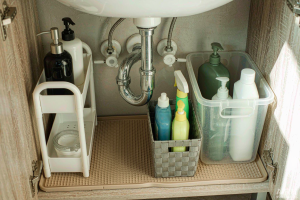
1. Empty the cabinet and inspect it first
Take everything out, wipe down the cabinet floor, and look for drips, damp patches, swelling, or a musty smell. If you find an active leak, fix it before adding a liner or organizer; a tidy shelf will only hide the problem. Sort what remains into daily toiletries, backups, grooming tools, and cleaning products. Move items that are not suited to a damp cabinet elsewhere.
2. Measure the space the pipes leave behind
Measure the cabinet’s interior width, depth, and height, then measure the actual door opening. A pull-out tray can fit inside the cabinet but fail to pass through its narrower opening. Note the drainpipe’s curve (the P-trap), where the supply lines enter, and how far the shutoff valves project. Open the cabinet door fully and check where hinges and door-mounted accessories would collide. Take a photo with your measurements beside the cabinet; it is easier to compare organizers against a real layout than a guess.
3. Choose an organizer to suit the pipe layout
For pipes in the center, try two narrow bins or small drawers on either side. You can pull out a whole category without reaching around the drain. If the pipes sit farther back, a freestanding two-tier shelf or a U-shaped organizer may use the space in front and beside them. Check the organizer’s exact cutout and adjustable range; the words ‘under-sink’ on a product listing do not guarantee a fit. For a deep, unobstructed side, a freestanding slide-out tray or a handled bin brings items at the back forward. A small turntable works only if there is room for a full rotation without striking a pipe, door, or bottle. In a tight cabinet, one simple handled bin may beat a complicated tiered unit.
4. Keep valves and pipe joints accessible
Leave enough open space to see under the drain and reach each shutoff valve without dismantling your whole setup. Avoid wedging bins against flexible supply lines or packing paper goods directly beneath pipe joints. A removable, water-resistant liner can make spills easier to spot and clean, but it is not a fix for a leak. Recheck the area whenever you clean the cabinet, especially after moving an organizer.
5. Put everyday products in front, backups behind
Give frequently used items a front-facing home: one small bin for daily skincare, another for hair care, and perhaps a caddy for tools. Put sealed backups in a labeled bin farther back or on an upper tier, provided you can still pull it out. Keep a clear route to the valves. If you share the bathroom, label by person or routine rather than filling every spare inch with tiny containers. The test is simple: can you retrieve one item and put it back without shifting three others?
6. Treat cleaning supplies and medicines differently
If young children can access this cabinet, an unlocked space below the sink is not an appropriate place for cleaners. Poison Help advises keeping household cleaners in their original containers and in locked cabinets or out of children’s reach; store cleaners separately from personal-care items. Poison Help prevention guidance. Medicines need another location, too: MedlinePlus notes that bathroom heat and moisture can damage them and recommends a cool, dry place, following any product-specific instructions. MedlinePlus medicine-storage guidance.
A quick setup for three common cabinets
Center drainpipe: Put a narrow, washable bin on each side. Keep the middle clear for the P-trap and access to the valves. Pipe near the back wall: Try a shallow organizer in front, but make sure it lifts out quickly for inspection. Very small vanity: Choose one handled caddy for the essentials and move overflow outside the bathroom. Adding more tiers is not useful if the door cannot close or your hand cannot reach the back.
Frequently asked questions
What is the best way to organize under a bathroom sink with pipes in the way? Measure the door opening and pipe position first, then use narrow bins, a freestanding U-shaped shelf, or a pull-out organizer that fits your layout. Keep the shutoff valves reachable.
Can I use a tension rod under the sink? It may hold light items if the cabinet walls, span, and rod rating allow it, but do not use it to press on pipes or carry heavy bottles. A stable freestanding bin is often simpler.
Should towels or medicine go under the bathroom sink? Store medicines as the label directs, typically in a cool, dry place rather than a humid bathroom. Spare towels may be better in a dry closet if leaks or dampness are possible under the sink.
The practical takeaway
You do not need to fill every corner of the vanity. Clear the space, measure the plumbing, give your most-used items a simple home, and leave access to the water supply. An organizer earns its place only if it makes the cabinet easier to use and easier to inspect.